Montessori Education in Nigeria: Complete Guide for Parents and School Owners (2026)
Introduction
In Nigeria's increasingly competitive education landscape, parents are searching for schools that offer more than just exam preparation—they want environments where their children develop critical thinking, independence, and a genuine love for learning. This demand has sparked growing interest in Montessori education.
But what exactly is Montessori education? Is it just expensive schools with fancy toys? How does it differ from traditional Nigerian teaching methods? And most importantly—can Nigerian schools successfully implement Montessori principles to attract more students and deliver better outcomes?
This comprehensive guide answers all your questions about Montessori education in Nigeria. Whether you're a parent evaluating school options or a school owner considering Montessori implementation to differentiate your institution, you'll find actionable insights backed by research and Nigerian success stories.
According to the Foundation for Montessori Education in Nigeria, Montessori education is gradually being recognized as one of the most effective forms of early childhood education in Nigeria—and for good reason.
What is Montessori Education?
The Origins
Montessori education was developed by Dr. Maria Montessori, an Italian physician and educator, in the early 1900s. Her revolutionary approach was based on scientific observation of how children naturally learn—through exploration, hands-on activity, and self-directed discovery.
Core Philosophy
"Follow the child"—this simple principle guides everything in Montessori education.
Key Beliefs:
- Children are naturally curious and capable learners
- Learning happens best through hands-on experience, not passive listening
- Each child develops at their own pace
- The teacher's role is to guide, not dictate
- Prepared environments encourage independence and discovery
- Mixed-age classrooms foster peer learning and mentorship
How It Differs from Traditional Education
Teaching Style
- Traditional: Teacher-centered (lectures)
- Montessori: Child-centered (exploration)
Learning Method
- Traditional: Rote memorization
- Montessori: Hands-on discovery
Classroom Setup
- Traditional: Rows of desks, chalkboard
- Montessori: Learning stations, child-sized furniture
Curriculum
- Traditional: Fixed, uniform for all
- Montessori: Individualized to each child's pace
Age Grouping
- Traditional: Same-age classes
- Montessori: Mixed-age groups (3-year spans)
Assessment
- Traditional: Exams and grades
- Montessori: Observation and portfolios
Teacher Role
- Traditional: Instructor who talks
- Montessori: Guide who observes and facilitates
Student Choice
- Traditional: Minimal (teacher decides activities)
- Montessori: Significant (child chooses work)
Focus
- Traditional: Academic knowledge for exams
- Montessori: Holistic development (academic + life skills)
While traditional Nigerian schools follow the NERDC curriculum with teacher-led instruction, Montessori schools use hands-on materials and child-directed learning to achieve educational goals.
The Montessori Method: Key Components
1. Prepared Environment
What It Means: The classroom is carefully designed to encourage independent learning and exploration.
Characteristics:
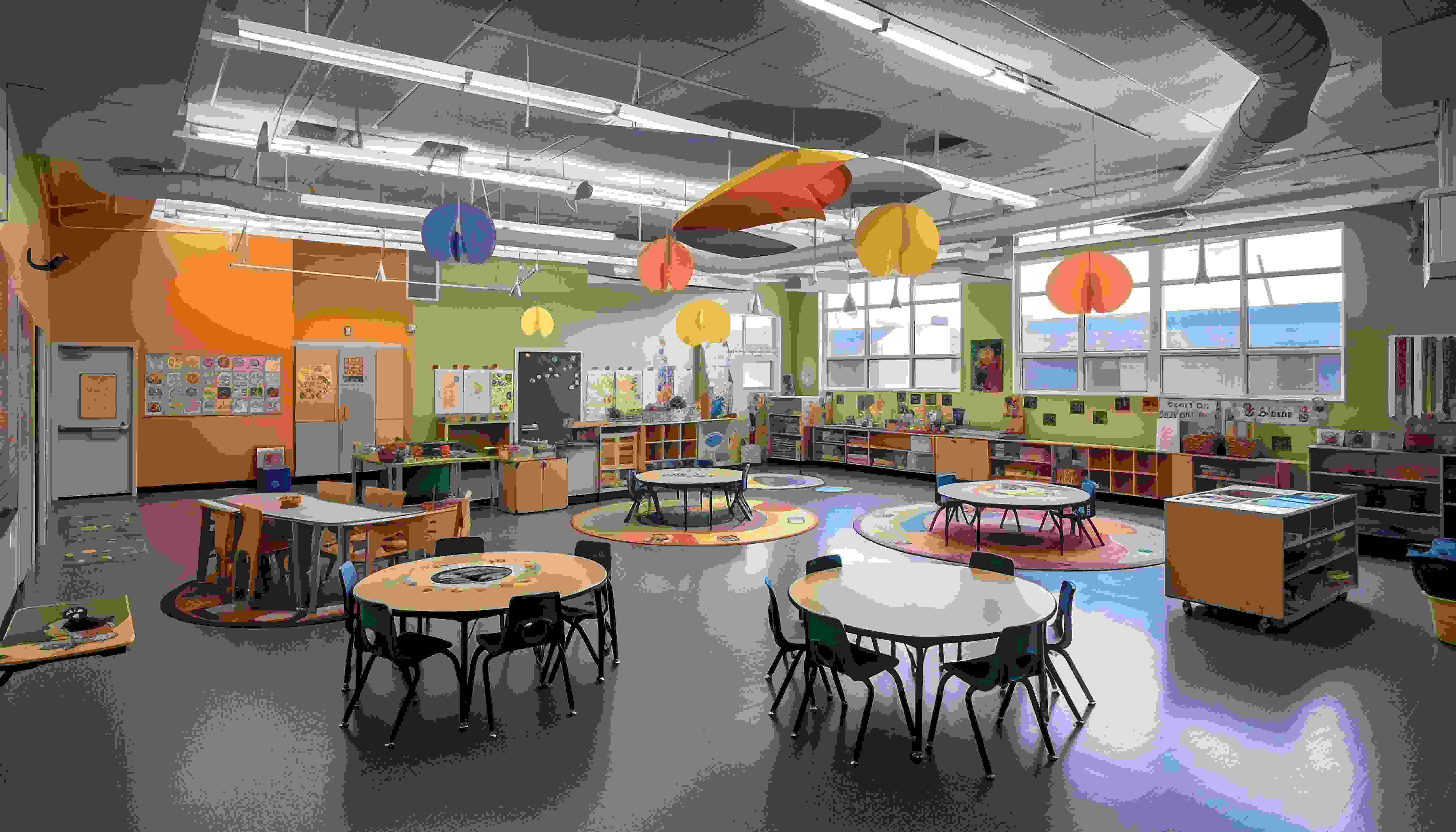
- Child-sized furniture and materials at child's height (so they don't need adult help)
- Organized learning stations for different subject areas
- Natural materials (wood, metal, fabric) rather than plastic
- Aesthetically pleasing spaces with natural light, plants, and order
- Freedom of movement (children can move around, not confined to desks)
- Limited materials (quality over quantity, reduces distraction)
Nigerian Context: Even budget-conscious Nigerian schools can create prepared environments using locally-sourced wooden materials and rearranging existing classrooms.
2. Montessori Materials
Specially Designed Learning Tools:
- Self-correcting: Child can see and fix their own mistakes without teacher intervention
- Hands-on: Engage multiple senses (touch, sight, sometimes sound)
- Sequential: Progress from simple to complex
- Concrete to abstract: Children manipulate physical objects before learning abstract concepts
Examples:
Mathematics:
- Golden Beads: Physical beads representing units, tens, hundreds, thousands
- Number Rods: Visual representation of quantities
- Bead Frames: Hands-on addition, subtraction, multiplication
Language:
- Sandpaper Letters: Children trace letters while saying sounds (multi-sensory)
- Moveable Alphabet: Build words with letter tiles before writing
- Phonetic Objects: Match objects to beginning sounds
Practical Life:
- Pouring water between containers (hand-eye coordination)
- Buttoning frames (fine motor skills)
- Sweeping and cleaning (independence, responsibility)
Sensorial:
- Pink Tower: Cubes of graduated sizes (visual discrimination)
- Color Tablets: Matching and grading colors
- Sound Cylinders: Matching sounds (auditory development)
Where to Get in Nigeria:
- Import from certified Montessori suppliers
- Purchase from Greensprings Training College in Lagos
- Commission local carpenters to make materials (cost-effective)
3. Three-Hour Work Cycle
Uninterrupted Work Time:
- Children get 3-hour blocks to choose activities and work at their own pace
- No bells interrupting every 30-40 minutes
- Deep concentration and "flow state" possible
- Teacher observes and guides only when needed
Why It Matters: Research shows that when children can work without interruption, they develop:
- Longer attention spans
- Better problem-solving skills
- Self-discipline
- Intrinsic motivation
4. Mixed-Age Classrooms
Age Groupings:
- Infant Community: 0-18 months
- Toddler Community: 18 months - 3 years
- Primary/Casa: 3-6 years (equivalent to Nursery/Pre-primary)
- Lower Elementary: 6-9 years (Primary 1-3)
- Upper Elementary: 9-12 years (Primary 4-6)
- Adolescent: 12-18 years (Junior and Senior Secondary)
Benefits:
- Older children reinforce their learning by teaching younger ones
- Younger children learn from observing older peers
- Reduces competition, increases collaboration
- Children develop leadership and empathy
- More like real-world social structures (families, workplaces)
5. Trained Montessori Teachers (Guides)
Different Role:
- Called "guides" or "directresses", not teachers
- Observe more than instruct
- Present lessons individually or in small groups
- Follow each child's interests and readiness
- Prepare the environment and materials
- Model grace, courtesy, and respect
Training Required:
- AMI (Association Montessori Internationale) certification (gold standard)
- AMS (American Montessori Society) certification
- Local training: Greensprings Training College offers Montessori diploma in Nigeria
Investment: Well-trained Montessori guides are critical—poorly implemented Montessori is just "free play" without educational structure.
The Montessori Curriculum: Eight Key Areas
1. Practical Life
Focus: Real-world skills that develop independence, concentration, and fine motor skills.
Activities:
- Care of Self: Dressing frames (buttons, zippers, laces), hand washing, food preparation
- Care of Environment: Sweeping, dusting, watering plants, table washing
- Grace and Courtesy: Greeting, saying please/thank you, waiting turns
- Control of Movement: Walking on a line, carrying objects carefully
Nigerian Adaptation: Include cultural practices like tying wrapper, using mortar and pestle, traditional greetings.
Why It Matters: These "simple" activities build executive function skills (focus, planning, self-control) that predict academic success.
2. Sensorial Education
Focus: Refine the five senses to prepare for academic learning.
Activities:
- Visual: Matching colors, grading sizes, recognizing shapes
- Tactile: Feeling textures, temperature variations
- Auditory: Matching sounds, recognizing tones
- Olfactory: Identifying scents
- Gustatory: Distinguishing tastes
Academic Connection:
- Visual discrimination → reading readiness (distinguishing letters)
- Auditory discrimination → phonics (hearing different sounds)
- Tactile sense → writing readiness (pencil grip, control)
3. Mathematics
Montessori Advantage: Children see and touch math concepts before working abstractly.
Progression:
- Concrete: Golden beads (physically count units, tens, hundreds)
- Representation: Number cards represent quantities
- Abstract: Solve problems on paper
Topics Covered:
- Number recognition and quantity (1-10, then 11-99, then 100-1000)
- Decimal system (units, tens, hundreds, thousands)
- Four operations (addition, subtraction, multiplication, division)
- Fractions (using fraction circles, insets)
- Geometry (shapes, angles, theorems)
- Measurement and money
Result: Children understand why math works, not just memorizing procedures.
4. Language
Whole Language Approach: Reading and writing develop naturally together.
Progression:
- Oral Language: Vocabulary building, storytelling, conversations
- Phonetic Awareness: Sound games, sandpaper letters
- Writing: Tracing letters, moveable alphabet, then pencil writing
- Reading: Decoding phonetic words, then sight words, then books
- Grammar: Introduced hands-on (e.g., grammar symbols)
- Composition: Creative writing, reports, poetry
Nigerian Context:
- Can integrate English, Yoruba, Igbo, Hausa using same Montessori methods
- Bilingual or trilingual literacy possible from early age
- Cultural stories and folktales incorporated
5. Culture (Geography and History)
"Cosmic Education": Understanding the universe and our place in it.
Geography:
- Globe and continent maps (puzzle pieces)
- Land and water formations (miniature landscapes)
- Countries, flags, cultures
- Climate zones and ecosystems
History:
- Timeline of life on Earth
- Human civilizations
- Historical figures and inventions
- Personal and family history
Nigerian Integration:
- Nigerian geography (states, capitals, landmarks)
- Nigerian history (pre-colonial, colonial, independence)
- Ethnic groups and cultural diversity
- African history and pride
6. Science
Hands-On Exploration:
Biology:
- Plant and animal classifications
- Life cycles (planting seeds, raising butterflies)
- Parts of plants and animals (puzzle cards)
- Human body systems
Physical Science:
- States of matter (solid, liquid, gas)
- Magnetism experiments
- Simple machines
- Sink and float
Earth Science:
- Weather observation and recording
- Rocks and minerals
- Solar system and astronomy
Method: Children conduct experiments, observe nature, ask questions, discover answers.
7. Art
Creative Expression:
- Drawing, painting, collage
- Clay modeling, sculpture
- Crafts using natural materials
- Art appreciation (studying famous artists)
Integration: Art is often integrated with other subjects (e.g., painting maps, sculpting land formations).
8. Music and Movement
Musical Development:
- Rhythm instruments
- Singing songs from various cultures
- Music appreciation
- Simple instruments (bells, xylophones)
Movement:
- Walking on the line (balance and coordination)
- Dance and creative movement
- Physical education games
Benefits of Montessori Education
1. Academic Excellence
Research Findings:
- Montessori students score significantly higher on standardized tests in reading and math (multiple studies)
- By age 5, Montessori children outperform traditional preschool children in literacy and numeracy
- Better prepared for primary school academic demands
Why:
- Deep understanding (not just memorization)
- Strong foundation in concrete concepts before abstract
- Self-paced learning ensures mastery before moving on
2. Independence and Self-Confidence
What Parents Notice:
- Children can dress themselves, prepare simple meals, clean up
- Take initiative to solve problems
- Don't wait for adults to tell them what to do
- Confident in their abilities
Long-term Impact:
- Better prepared for university and career (self-starters)
- Entrepreneurial mindset
- Resilience when facing challenges
3. Love of Learning
Intrinsic Motivation:
- Children learn because they're curious, not for grades or rewards
- See learning as joyful exploration, not tedious work
- Continue seeking knowledge throughout life
Contrast: Traditional education often kills natural curiosity by making learning about external rewards (grades, parental approval, avoiding punishment).
4. Social and Emotional Development
Mixed-Age Benefits:
- Older children develop leadership and mentoring skills
- Younger children learn from role models
- Cooperation valued over competition
- Empathy and respect for others
Emotional Intelligence:
- Children learn to identify and express emotions appropriately
- Conflict resolution skills
- Grace and courtesy in interactions
Result: Well-adjusted children with strong social skills.
5. Executive Function Skills
What Are These?: Focus, working memory, cognitive flexibility, self-control.
How Montessori Builds Them:
- Three-hour work cycle → sustained attention
- Choosing activities → decision-making and planning
- Self-correcting materials → monitoring own work
- Freedom within limits → self-discipline
Why It Matters: Executive function predicts academic success more than IQ.
6. Practical Life Skills
What Children Learn:
- Time management (planning their work)
- Organization (maintaining materials)
- Responsibility (caring for environment)
- Problem-solving (figuring things out independently)
- Basic life skills (cooking, cleaning, self-care)
Nigerian Parent Perspective: "My 4-year-old can set the table, sweep the floor, and even help prepare simple meals. Children from traditional schools can't do this at age 7!" — Parent at Cornerstone Montessori, Abuja
7. Long-Term Success
2021 Research Study: Adults who attended Montessori schools for at least 2 years scored significantly higher on:
- General well-being
- Engagement in work and life
- Social trust
- Self-confidence
Career Outcomes: Many successful entrepreneurs and innovators attended Montessori schools (e.g., Google founders Larry Page and Sergey Brin, Amazon founder Jeff Bezos, Wikipedia founder Jimmy Wales).
Montessori Education in Nigeria: Current Landscape
Growth and Popularity
Trend: Montessori education in Nigeria is gradually being recognized as the best form of teaching in early childhood education, especially in private schools in major cities.
Where It's Growing:
- Lagos: Largest concentration of Montessori schools
- Abuja: Growing number of Montessori nursery and primary schools
- Port Harcourt, Ibadan, Enugu: Emerging Montessori presence
- Other cities: Slowly expanding
Challenges:
- Public schools: Still predominantly use traditional methods
- Rural areas: Limited access to Montessori education
- Cost barrier: Most Montessori schools are premium-priced
Notable Montessori Schools in Nigeria
1. Greensprings School (Lagos)
Location: Multiple campuses (Lekki, Ikoyi, Anthony)
Why Notable:
- One of Nigeria's most established Montessori schools
- AMI (Association Montessori Internationale) affiliation
- Offers Montessori from infant community through primary
- Also runs Greensprings Training College for Montessori teacher training
Tuition Range: Premium (₦1.5M - ₦3M+ per year depending on level)
2. Cornerstone Montessori Schools (Abuja)
Why Notable:
- Leading Montessori institution in Abuja
- Well-defined prepared environments
- Trained Montessori guides
- Strong community of Montessori families
Programs: Nursery through primary
3. Foundation for Montessori Education in Nigeria (FMEN)
Role: Advocacy and support organization
Mission:
- Promote integration and development using Montessori framework
- Support Montessori schools and teachers
- Enlighten Nigerian public about Montessori benefits
- Affiliated with Association Montessori Internationale (AMI)
Training and Certification in Nigeria
Greensprings Training College (Lagos):
- Offers Montessori Diploma Programme
- Trains teachers in authentic Montessori methods
- Recognized certification
- Practical training in actual Montessori classrooms
Investment:
- Training courses: ₦500,000 - ₦1,500,000 (depending on level and duration)
- Time commitment: Several months of intensive study
Alternative:
- International AMI or AMS training (more expensive, requires travel)
- Online courses (less effective—Montessori requires hands-on practice)
How Nigerian Schools Can Implement Montessori Education
For School Owners: Is Montessori Right for Your School?
Consider Montessori If:
- ✅ You want to differentiate in a crowded market
- ✅ You're targeting middle to upper-class families who value quality education
- ✅ You're willing to invest in teacher training and materials
- ✅ You have space for flexible classroom arrangements
- ✅ You want to attract parents seeking holistic child development (not just exam scores)
Montessori May Not Fit If:
- ❌ You're targeting extreme budget market (Montessori has setup costs)
- ❌ You're unwilling to train teachers properly (poor Montessori is worse than good traditional)
- ❌ Parents in your area only care about Common Entrance scores (Montessori students excel but differently)
- ❌ You need immediate profit (Montessori is medium to long-term investment)
Implementation Models
Model 1: Full Montessori School
What It Means:
- Pure Montessori from nursery through primary (possibly secondary)
- Trained Montessori guides for every classroom
- Complete Montessori materials for all areas
- Mixed-age classrooms
- Three-hour work cycles
Best For:
- New schools starting from scratch
- Schools rebranding completely
- Areas with high demand for alternative education
Investment: High (₦5M - ₦20M+ for full setup depending on enrollment)
Returns: Premium pricing, strong differentiation, loyal parent community
Model 2: Montessori Nursery + Blended Primary
What It Means:
- Pure Montessori for ages 2-6 (Nursery/Pre-primary)
- Primary school blends Montessori principles with NERDC curriculum
- Prepares students for BECE and WAEC while maintaining Montessori philosophy
Best For:
- Existing schools wanting to add Montessori
- Markets where parents want both Montessori benefits AND traditional academic outcomes
- Transition strategy
Investment: Moderate (₦2M - ₦8M for nursery section)
Benefit: Attracts Montessori families while still preparing students for Nigerian exams
Model 3: Montessori-Inspired Classrooms
What It Means:
- Not full Montessori, but incorporates key principles:
- Hands-on learning materials
- Child-centered activities
- Some student choice in learning
- Prepared environment concepts
- Still follows traditional Nigerian curriculum
Best For:
- Budget schools wanting to improve without complete overhaul
- Schools testing Montessori before full commitment
- Teachers wanting to improve current methods
Investment: Low to moderate (₦500K - ₦2M for materials and basic training)
Benefit: Improves learning outcomes without radical change
Step-by-Step Montessori Implementation Guide
Phase 1: Research and Planning (2-3 Months)
1. Education
School Leadership Should:
- Read foundational Montessori books (e.g., The Absorbent Mind by Maria Montessori)
- Visit established Montessori schools (observe classrooms)
- Attend Montessori workshops or conferences
- Talk to Montessori school owners about challenges and successes
2. Market Research
Questions to Answer:
- Are there Montessori schools in your area? (Competition or proof of demand?)
- What do local parents know about Montessori?
- What are parents willing to pay for Montessori education?
- What's the demographic profile of Montessori families?
Method:
- Survey current and prospective parents
- Analyze competitor pricing and enrollment
- Study successful Montessori schools in Nigeria
3. Financial Planning
Budget For:
Initial Investment:
- Teacher training: ₦500K - ₦2M per teacher
- Montessori materials: ₦1M - ₦5M per classroom (can be phased)
- Classroom renovation: ₦500K - ₦2M per room
- Furniture (child-sized): ₦300K - ₦1M per classroom
- Marketing and rebranding: ₦500K - ₦2M
Ongoing Costs:
- Higher teacher salaries (trained Montessori guides command premium)
- Material replacement and expansion
- Continued teacher professional development
Revenue Projections:
- Montessori schools typically charge 30-100% more than traditional schools
- Calculate break-even timeline (usually 2-3 years)
4. Create Implementation Timeline
Sample Timeline:
- Months 1-2: Research and decision-making
- Months 3-4: Teacher training begins
- Months 4-5: Classroom preparation, material procurement
- Month 6: Marketing campaign launch
- Month 7: Enrollment for new Montessori section
- Month 8-9: Continue training, finalize setup
- Month 10: Montessori program launches
Phase 2: Teacher Training (Ongoing Priority)
Critical Success Factor: Quality Montessori implementation depends entirely on well-trained teachers.
Training Options
Option 1: Enroll Teachers in Greensprings Training College
- Duration: 6-12 months
- Cost: ₦500K - ₦1.5M per teacher
- Benefit: Recognized certification, hands-on practice
- Challenge: Teacher must be released from current duties or school hires new teachers pre-trained
Option 2: Bring Montessori Trainer to Your School
- Format: Workshop series over several months
- Cost: ₦1M - ₦3M for cohort training (more cost-effective for multiple teachers)
- Benefit: Train entire staff together, context-specific
- Challenge: Finding qualified trainer willing to travel
Option 3: International Training
- Where: AMI or AMS training centers abroad
- Cost: ₦5M - ₦10M+ per teacher (tuition, travel, accommodation)
- Benefit: Gold-standard certification
- Challenge: Very expensive, teachers may not return
Recommended Approach:
- Send 1-2 lead teachers for intensive training (Greensprings or international)
- These teachers train others in-house (cascade model)
- Bring consultant for workshops and quality assurance
- Ongoing mentoring and coaching
What Teachers Must Learn
Core Competencies:
- Montessori philosophy and child development theory
- How to prepare the environment
- Material presentations (lessons) for all curriculum areas
- Observation skills (tracking each child's progress)
- Classroom management in freedom-within-limits structure
- Grace and courtesy modeling
- Record-keeping and progress tracking
Time Needed: Minimum 200-300 hours of training for basic competency.
Phase 3: Classroom Preparation
Physical Space
Ideal Montessori Classroom:
- Size: Spacious enough for 15-25 children to move freely (40-60 sqm)
- Layout: Open floor plan with defined areas (Practical Life corner, Math area, Language shelves, etc.)
- Flooring: Washable (children work on floor mats)
- Lighting: Natural light preferred, supplemented with warm artificial light
- Colors: Neutral, calming tones (not overstimulating)
- Storage: Low, open shelves accessible to children
- Outdoor access: Ideally opens to garden or outdoor learning space
Nigerian Adaptation:
- Use existing classrooms—remove rows of desks, repaint
- Commission local carpenters for child-sized furniture and shelves
- Use mats on existing tile floors
- Maximize natural ventilation (important in hot climate)
Materials Procurement
Strategy 1: Import Complete Sets
- Suppliers: Nienhuis Montessori (Netherlands), Gonzagarredi (Italy), Alison's Montessori (USA)
- Cost: Very expensive (₦3M - ₦8M per classroom for complete set)
- Benefit: Highest quality, authentic materials
- Challenge: Shipping costs, import duties, long wait times
Strategy 2: Purchase from Nigerian Suppliers
- Source: Greensprings School sometimes sells materials; other Montessori schools may know suppliers
- Cost: Moderate (₦1.5M - ₦4M per classroom)
- Benefit: Local availability, naira pricing
- Challenge: Limited selection
Strategy 3: Locally Made Materials
- Method: Commission Nigerian carpenters and craftsmen to build materials based on Montessori specifications
- Cost: Budget-friendly (₦500K - ₦2M per classroom)
- Benefit: Very affordable, supports local economy
- Challenge: Quality control—requires supervision to ensure accuracy
Strategy 4: Phased Procurement
- Approach: Start with essentials for first term, add more materials each term
- Priority Order:
- Practical Life (easiest and cheapest to make/source)
- Sensorial materials (foundational for other learning)
- Math materials (especially golden beads, number rods)
- Language materials (sandpaper letters, moveable alphabet)
- Culture and Science materials (can start simple, expand over time)
Recommended: Combination of strategies—import some key materials, make others locally, purchase phased over 2-3 years.
Phase 4: Marketing and Enrollment
Positioning Your Montessori Program
Key Messages:
- "Where your child develops independence, confidence, and a love of learning"
- "Hands-on learning that prepares children for real life, not just exams"
- "Proven globally, now available in [Your City]"
- "Small class sizes, individualized attention, holistic development"
Target Audience:
- Educated parents (university graduates who value quality education)
- Professionals (doctors, lawyers, entrepreneurs, corporate executives)
- Expatriates and returnees (familiar with Montessori from abroad)
- Parents dissatisfied with traditional "sit down and copy notes" schools
Marketing Channels
Digital Marketing:
- SEO-optimized website with Montessori education information (like this guide!)
- Social media content showing children engaged in Montessori activities
- Video tours of prepared environment
- Parent testimonials
- Blog posts educating parents about Montessori benefits
- School management system with parent portal for easy communication
Traditional Marketing:
- Open house events (let parents see Montessori classroom in action)
- Montessori awareness workshops for parents
- Partnerships with pediatricians and child development centers (referrals)
- Print ads in premium magazines and newspapers
- Billboards in affluent neighborhoods
Content Marketing Strategy:
- Create comparison content: "Montessori vs. Traditional Education"
- Address parent concerns: "Will my child be ready for primary school?"
- Share success stories and research
- Offer free "Introduction to Montessori" webinar
Learn more: How to Market Your School in Nigeria
Pricing Strategy
Montessori Premium: Position Montessori as premium offering—parents expect to pay more for:
- Specialized teacher training
- Expensive imported materials
- Low student-teacher ratios (ideal 12:1 to 15:1)
- Individualized attention
- Holistic approach
Benchmarking:
- Research what other Montessori schools charge in your region
- Typically 30-100% higher than traditional schools of similar quality
- Be transparent about why (better materials, trained teachers, smaller classes)
Example Pricing (Lagos/Abuja, 2026):
- Traditional Budget School: ₦150K - ₦400K per year
- Traditional Mid-Range School: ₦400K - ₦1.2M per year
- Montessori School: ₦800K - ₦3M+ per year
Scholarship Options: Consider partial scholarships for deserving families—builds goodwill and shows Montessori isn't just for ultra-rich.
Phase 5: Launch and Continuous Improvement
Soft Launch Strategy
Year 1 Recommendation:
- Start small (1-2 Montessori classrooms)
- Focus on ages 3-6 (Primary/Casa level—easiest to implement well)
- Cap enrollment (maintain quality over quick profit)
- Over-communicate with pioneer parents (they're your ambassadors)
Why Start Small:
- Easier to maintain quality
- Teachers gain experience before scaling
- Work out kinks before expanding
- Build reputation gradually
Quality Assurance
Ongoing Monitoring:
- Regular classroom observations by trained Montessori consultant
- Video review of teacher presentations
- Parent feedback surveys
- Child development tracking and portfolios
- Peer observation among teachers
Red Flags to Address:
- Teacher reverting to traditional lecturing
- Children not engaged or wandering aimlessly (sign of poor environment preparation)
- Parent complaints about "too much play, not enough learning"
- Materials disorganized or broken (environment not maintained)
Continuous Teacher Development
Never Stop Training:
- Monthly staff meetings to discuss Montessori philosophy and practice
- Attend Montessori conferences and workshops
- Bring consultants for annual refresher training
- Teacher exchanges with other Montessori schools
- Build a Montessori library for teachers
Addressing Common Parent Concerns About Montessori
Concern 1: "Will my child be prepared for primary school exams?"
Answer: Yes! Research consistently shows Montessori children outperform traditional school children in reading and math by the time they enter primary school.
Why:
- Montessori builds deep understanding, not just rote memorization
- Strong foundation in concrete concepts before abstract
- Self-paced learning ensures mastery
- Love of learning translates to motivation
Evidence: Multiple studies show Montessori students score significantly higher on standardized tests. Plus, Montessori method can be blended with NERDC curriculum preparation in later years.
Concern 2: "It looks like just playing—are they actually learning?"
Answer: What looks like "play" is actually purposeful work with educational materials designed to teach specific concepts.
Examples:
- Pouring water = hand-eye coordination, concentration (pre-writing skills)
- Sorting objects = categorization, math readiness
- Tracing sandpaper letters = letter recognition, muscle memory for writing
Montessori Perspective: "Play is the work of the child." Learning through hands-on exploration is more effective than passive listening.
Concern 3: "My child is shy—will they be okay choosing their own activities?"
Answer: Montessori is actually ideal for introverted children:
- They can work independently without being called on publicly
- No pressure to perform in front of class
- Teacher gives individual lessons, not group lectures
- Mixed-age environment is less intimidating (not competing with same-age peers)
Result: Many shy children blossom in Montessori because they can learn at their own pace without spotlight.
Concern 4: "What about discipline? Isn't it too free?"
Answer: Montessori is "freedom within limits", not free-for-all.
Structure:
- Clear ground rules (respect others, care for materials, clean up after yourself)
- Natural consequences (if you spill water, you clean it up)
- Teacher guides behavior through modeling and redirection
- Children learn self-discipline, not just obedience to external authority
Outcome: Montessori children often show better self-control than traditionally schooled children because discipline comes from within, not fear of punishment.
Concern 5: "It's so expensive—is it worth it?"
Answer: Consider long-term return on investment:
What You're Paying For:
- Trained teachers (years of specialized education)
- Expensive, specialized materials
- Small class sizes (more individual attention)
- Holistic development (not just academics)
Long-term Benefits:
- Academic success (less need for expensive extra lessons later)
- Independence and life skills
- Love of learning (motivated students need less pushing)
- Strong foundation for future success
Alternative Perspective: What's the cost of sending your child to a school that kills their natural curiosity and makes them hate learning?
Concern 6: "Will my child struggle when they transfer to traditional school?"
Answer: Transition is usually smooth:
Academic Preparedness:
- Montessori children often ahead academically (especially math and reading)
- Critical thinking skills help them adapt to new environment
- Strong work ethic and self-discipline
Potential Challenges:
- May find traditional school boring initially (less hands-on)
- Might question "Why can't I choose my work?" (used to autonomy)
- May need time to adjust to sitting at desk all day
Solutions:
- Choose traditional school with some progressive elements
- Prepare child for transition with honest conversation
- Stay engaged and supplement at home if needed
- Many schools now offer Montessori through primary, reducing transitions
Montessori vs. Other Progressive Approaches
Montessori vs. Waldorf (Steiner)
Materials
- Montessori: Structured, self-correcting
- Waldorf: Natural, open-ended (blocks, dolls)
Academics
- Montessori: Early literacy and numeracy
- Waldorf: Delays formal academics until age 7
Teacher Role
- Montessori: Observer and guide
- Waldorf: Creative storyteller and artist
Technology
- Montessori: Neutral (used if educationally appropriate)
- Waldorf: Strongly discouraged
Assessment
- Montessori: Observation and portfolios
- Waldorf: Narrative reports, no grades
Available in Nigeria
- Montessori: Yes (several schools)
- Waldorf: Very rare
Montessori vs. Reggio Emilia
Curriculum
- Montessori: Structured materials and sequence
- Reggio Emilia: Child-led projects
Teacher Role
- Montessori: Guide with specific presentations
- Reggio Emilia: Co-learner and documenter
Materials
- Montessori: Prescribed Montessori materials
- Reggio Emilia: Open-ended, found materials
Philosophy Origin
- Montessori: Dr. Maria Montessori (Italy, early 1900s)
- Reggio Emilia: Loris Malaguzzi (Italy, post-WWII)
Available in Nigeria
- Montessori: Yes
- Reggio Emilia: Extremely rare
Montessori vs. Play-Based Learning
Structure
- Montessori: Purposeful work with specific materials
- Play-Based: Free play with various toys
Learning Goals
- Montessori: Clear educational objectives for each material
- Play-Based: Learning happens through play without specific curriculum
Teacher Role
- Montessori: Prepares environment, presents lessons
- Play-Based: Facilitates play, observes
Materials
- Montessori: Specific Montessori materials
- Play-Based: General toys and play equipment
Can Montessori and NERDC Curriculum Work Together?
The Challenge
Tension:
- Montessori emphasizes child-directed, self-paced learning
- NERDC curriculum requires specific topics covered at specific grades
- Nigerian exams (BECE, WAEC) test NERDC curriculum content
The Solution: Blended Approach
What Successful Nigerian Montessori Schools Do:
1. Pure Montessori for Ages 0-6
- No compromise on Montessori method during foundational years
- Build strong academic foundation and love of learning
- Develop independence and executive function skills
2. Montessori-Informed Primary (Ages 6-12)
- Use Montessori materials and philosophy to teach NERDC content
- Example: Teach NERDC science curriculum using hands-on experiments and Montessori cosmic education approach
- Maintain mixed-age classrooms or shift to same-age as children get older
- Keep emphasis on understanding, not just memorization
3. NERDC Alignment with Montessori Delivery
- Map NERDC learning objectives to Montessori scope and sequence
- Ensure all required topics covered, but using Montessori methods
- Supplement with Nigerian history, languages, culture (NERDC requirements)
- Prepare students for national exams while maintaining Montessori philosophy
4. Assessment Balance
- Continue with Montessori observation and portfolio assessment
- Introduce periodic tests to prepare for BECE/WAEC format
- Help students develop test-taking skills alongside deep understanding
Result: Students get Montessori benefits (independence, critical thinking, love of learning) AND perform excellently on Nigerian exams.
Success Story: Transforming a Traditional School to Montessori
Case Study: Rainbow Kids Academy, Lagos (Name Changed)
Background:
- Traditional nursery and primary school, established 2010
- Enrollment: 120 students
- Struggling with competition from newer, fancier schools
- Parents complaining about "too much homework for small children"
Decision (2022): Convert nursery section to Montessori to differentiate.
Actions Taken:
Year 1:
- Sent 2 lead teachers to Greensprings Training College (₦1.2M total)
- Renovated 3 nursery classrooms (₦1.5M)
- Purchased basic Montessori materials, commissioned local carpenter for some (₦2.5M)
- Launched marketing campaign emphasizing "child-centered learning" (₦800K)
- Held parent workshops to educate about Montessori
Year 2:
- Trained 3 additional teachers in-house (cascade model)
- Expanded materials collection (₦1.5M)
- Increased nursery fees by 40% (from ₦500K to ₦700K per year)
- Primary section remained traditional but incorporated some Montessori principles
Results After 2 Years:
Enrollment:
- Nursery enrollment: 40 → 72 students (+80%)
- Waitlist created for first time in school history
- 60% of new students came from parent referrals
Revenue:
- Nursery revenue: ₦20M → ₦50.4M annually (+152%)
- ROI: Initial ₦7M investment recovered in 1.5 years
Reputation:
- Google reviews: 3.8 → 4.7 stars
- Featured in local parenting magazine
- Invited to speak at education conference about Montessori implementation
Academic Outcomes:
- Montessori children transitioning to Primary 1 scored 15-20% higher on school readiness assessments
- Better behavior and focus compared to previous non-Montessori cohorts
Parent Satisfaction:
- 92% of parents "very satisfied" with Montessori program
- Common feedback: "My child actually wants to go to school!"
Challenges Faced:
- Initial parent resistance: "Too expensive, looks like just playing"
- Solution: Held monthly workshops showing parents what children learn through materials
- Teacher adjustment: Some traditional teachers struggled with new role
- Solution: Ongoing coaching, some teachers reassigned to primary section
- Material durability: Some locally-made materials broke
- Solution: Invested in higher-quality imported materials for heavy-use items
Technology and Montessori: Finding the Balance
Traditional Montessori View on Technology
Conservative Approach:
- Dr. Montessori didn't anticipate digital technology (she died in 1952)
- Classic Montessori emphasizes hands-on, sensorial learning
- Concern that screens reduce tactile experience and imaginative play
Modern Montessori and Technology
Nuanced Perspective:
- Technology is a tool, not inherently good or bad
- Use technology purposefully and limitedly
- Focus on creation, not consumption
Guidelines:
Ages 0-6 (Nursery/Early Childhood):
- ❌ Minimal to zero screen time during school hours
- Focus on hands-on materials that engage all senses
- Real-world experiences trump virtual
Ages 6-12 (Primary):
- ✅ Limited, purposeful technology use
- Typing and basic computer skills
- Research projects using internet (supervised)
- Coding and robotics (creating, not just consuming)
- Digital art and music creation
Ages 12-18 (Secondary):
- ✅ More integrated technology use
- Prepare students for digital world
- Emphasis on digital citizenship and safety
- Tools like AI-powered lesson planning can support learning
School Management Technology
Behind the Scenes: While Montessori classrooms minimize student screen time, school operations benefit greatly from technology:
SchoolHub for Montessori Schools:
- Parent communication: Updates via parent portal instead of paper notes
- Child progress tracking: Digital portfolios showing child's Montessori journey
- Observation records: Teachers log observations digitally
- Administrative efficiency: Automated report cards, attendance tracking
- Financial management: Track Montessori material purchases, parent payments
Result: Teachers spend less time on paperwork, more time observing and guiding children—the heart of Montessori education.
Frequently Asked Questions
Is Montessori only for rich families?
Reality: While many Montessori schools in Nigeria are premium-priced, Montessori education can be implemented at various price points:
- Budget schools can use Montessori-inspired approaches with locally-made materials (₦300K - ₦600K per year)
- Mid-range Montessori schools exist (₦600K - ₦1.2M per year)
- Premium Montessori schools (₦1.2M - ₦3M+ per year)
The principles (child-centered learning, hands-on materials, respect for child) can be applied regardless of budget.
Can Montessori work for Nigerian children?
Absolutely yes.
Montessori method is based on universal child development principles, not cultural specifics. Children in Nigeria, India, Japan, USA, Kenya—all benefit from:
- Hands-on learning
- Respect and independence
- Self-paced mastery
- Prepared environments
Nigerian Adaptations:
- Include Nigerian languages, cultural practices, local materials
- Teach Nigerian history and geography
- Align with NERDC where needed for exam preparation
What age is best to start Montessori?
Ideal: As early as possible (infant/toddler community from 18 months).
Why: Montessori builds on natural developmental stages. Starting early maximizes benefits.
But: Children can transition to Montessori at any age and still benefit. Even starting at 3, 5, or 7 years old brings improvements.
My child has been in traditional school—can they switch to Montessori?
Yes, but expect transition period (2-4 months):
What to Expect:
- Child may test boundaries (used to strict external control)
- May need to learn how to choose activities (used to being told what to do)
- Might resist initially ("This is not real school!")
How to Support:
- Talk positively about new school
- Visit Montessori classroom before starting
- Stay patient during adjustment
- Communicate with teachers
Most children adapt well and thrive.
Will Montessori children be "behind" in primary school?
No—typically they're ahead.
Research shows:
- Montessori children score higher in literacy and math
- Better prepared academically for primary school
- Stronger executive function skills (focus, planning, self-control)
Only "behind" in:
- Sitting still for long periods (which isn't actually a valuable skill)
- Mindlessly copying from board (not meaningful learning)
Can children with special needs attend Montessori schools?
It depends on the child's needs and school's capacity.
Montessori Strengths for Special Needs:
- Individualized pacing (no child left behind or held back)
- Multi-sensory materials (visual, tactile, auditory learning)
- Calm, organized environment
- Mixed-age classrooms reduce performance pressure
Challenges:
- Most Nigerian Montessori schools lack special education training
- Some materials require fine motor skills that may be difficult for certain disabilities
- Large class sizes (even in Montessori) may not provide enough support
Recommendation: Discuss child's specific needs with school to assess fit.
Conclusion
Montessori education offers a powerful alternative to traditional Nigerian schooling—one that develops independent, confident, joyful learners who excel academically while maintaining love of learning. For parents, choosing Montessori means investing in your child's holistic development. For school owners, implementing Montessori offers differentiation in a crowded market and attracts families who value quality education.
Key Takeaways:
For Parents:
- ✅ Montessori emphasizes hands-on learning, independence, and child-centered education
- ✅ Research shows Montessori children outperform traditional students academically
- ✅ Long-term benefits include better executive function, confidence, and love of learning
- ✅ Montessori can align with NERDC curriculum and exam preparation
- ✅ Available in Nigeria at various price points
For School Owners:
- ✅ Montessori implementation differentiates your school in competitive market
- ✅ Attracts educated, engaged parents willing to pay premium fees
- ✅ Requires significant investment in teacher training and materials
- ✅ Can be phased (start with nursery, expand over time)
- ✅ Blended approach works: Montessori methods + NERDC curriculum
- ✅ Technology (like SchoolHub) supports Montessori administration
Your Next Steps:
Parents:
- Visit Montessori schools in your area (observe classrooms)
- Ask about teacher qualifications (AMI/AMS certification?)
- Observe children—do they look engaged and happy?
- Talk to other Montessori parents about their experiences
- Consider visiting traditional schools for comparison
School Owners:
- Visit successful Montessori schools to see implementation
- Attend Montessori workshop or training introduction
- Survey your parent community—is there demand?
- Create business plan (investment, pricing, timeline)
- Start small (1-2 classrooms) before scaling
- Invest heavily in teacher training (makes or breaks Montessori)
- Explore school management technology to streamline operations
Recommended Resources:
Books:
- The Absorbent Mind by Maria Montessori
- Montessori: The Science Behind the Genius by Angeline Stoll Lillard
- How to Raise an Amazing Child the Montessori Way by Tim Seldin
Training:
- Greensprings Training College (Lagos, Nigeria)
- Association Montessori Internationale (AMI)
- American Montessori Society (AMS)
Organizations:
School Management:
Related Articles:
- Best School Management Systems in Nigeria
- SchoolHub School Management System
- Modern Teaching Methods for Nigerian Schools
- How to Organize Successful PTA Meetings
- Complete NERDC Curriculum Guide
- How AI Improves Nigerian Education
Ready to streamline your Montessori school's operations?
Start SchoolHub 7-Day Free Trial →
No credit card required • Full features • Nigerian Montessori schools trust SchoolHub
Last Updated: January 2026 Written by the SchoolHub Team - Supporting Nigerian Schools in Delivering Quality Education
Related Articles

Best Private Elementary Schools in the US
Find the best private elementary schools in the US for 2026. Compare Montessori, Waldorf, religious, and college-prep programs with tuition, curriculum, and tips.

10 Parent Engagement Strategies Every Nigerian School Should Use in 2026
Discover 10 proven parent engagement strategies that Nigerian schools can implement in 2026 to strengthen communication, boost student outcomes, and build lasting parent-school partnerships.

How to Prepare Students for Exams in Nigerian Schools: A Teacher's Guide
A comprehensive teacher's guide to preparing students for internal exams, WAEC, NECO, and JAMB CBT in Nigerian schools. Proven strategies, study techniques, and digital tools for better exam results.
Ready to Transform Your School?
Try SchoolHub free for 7 days. No credit card required.
Start Free TrialComments
No comments yet. Be the first to share your thoughts!